L U N G E
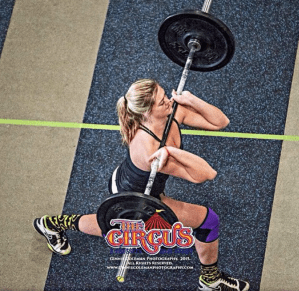
This is a single leg movement that can be performed in the frontal, sagittal and even transverse planes. The goal of this movement is to step forward with one leg and bring it to 90 degrees while the back leg lowers until the knee ALMOST touches the ground. This is used more often in everyday life that we think of like when getting laundry out of the machine, or lowering down without actually wanting to sit all the way down. It’s important to be able to comfortably do these movements without injury, and to have the strength to push yourself up without needing extra help.
Primary muscles used: Glutes and hamstrings.
B E N E F I T S
- Increased strength in hamstrings and glutes
- Improved mobility in the hip joints
- Core stability
- Improved acceleration
What athletes will benefit from implementing crawling exercises into their workouts?
- Sports that require forceful knee extension such as soccer
- Running (required muscular endurance in quads and glutes)
A S S E S S M E N T S
- FMS Stationary lunge
- Thomas Test
- Stork-Stand Balance Test
- Romberg Test
C O M M O N F A U L T S
- Inability to keep hips facing forward throughout entire movement
- Repetitively and/or forcefully touching knee all the way to the ground (may injure menisci and/or other patellar tendons)
- Leveraging weight forward to stand instead of using glutes and hamstrings to push weight upward
- Pointing toes outward instead of strait ahead
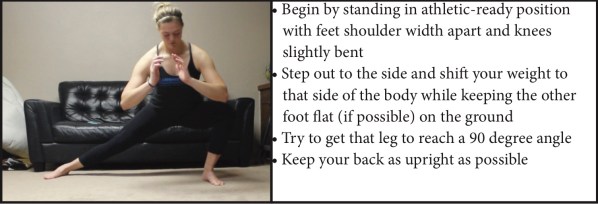
Exercise Example: Side Lunge (frontal plane)
Exercise Example: Weighted Front-Stepping Lunge
- Begin by standing in a narrow stance with your feet pointed strait forward and arms dangling at your sides with a dumbbell in each hand
- Step forward and bend your knee until it’s at about a 90 degree angle
- Back leg should almost touch the ground
- To stand back up, push through your front heel and lift yourself up to a standing position once again
- Alternate sides with each repetition
 Orenda