P U S H
The goal of this movement is to push the body away from an object, or to push an object away from the body using varied amounts of force while maintaining stability in either horizontal or vertical planes. The most basic form of a push movement we typically think of is the push up, but we use use the same muscles in daily activities like lifting heavy items overhead and moving furniture around the house.
The primary muscles used in the push are the pectorals, deltoids, and triceps. The amount each of these muscles are used depend on the specific movement. In general, the closer the hands are to the midline, to the more triceps we use, and the farther from the midline typically means more pectorals.
B E N E F I T S
- Increased core, upper back, pectoral and arm strength
- Increased core stability
- Comfort while doing daily activities and house chores
- Ability to easily get off the floor from laying down
A S S E S S M E N T S
- Shoulder push stabilization screen
- Shoulder flexion and extension test
- External and internal rotation test
- Apley’s scratch test
C O M M O N F A U L T S
- Inward rounding of the lumbar spine (lordosis)
- Arms placed too far back behind shoulders
- Protracted shoulders
- Uneven weight distribution
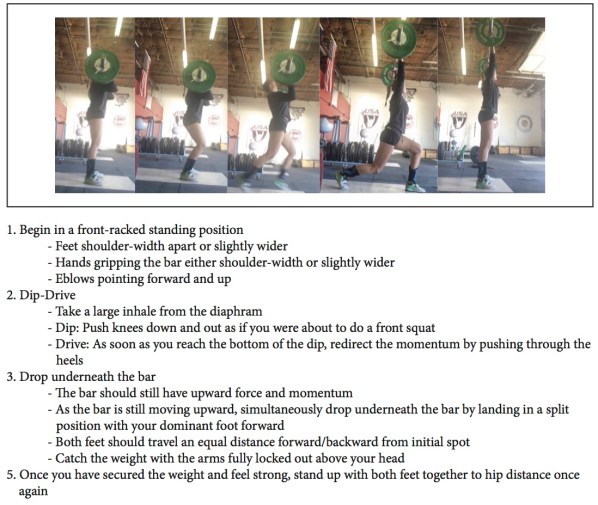
Exercise Example: Split Jerk
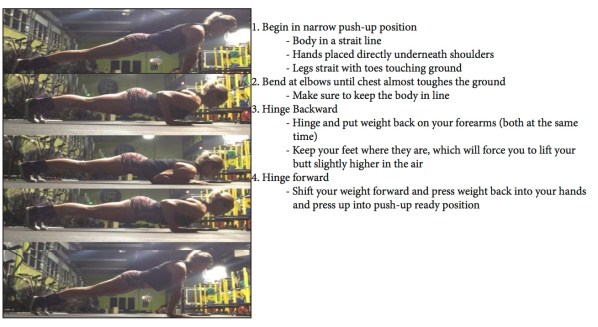
Exercise Example: Hinge Push-up
 Orenda