S Q U A T
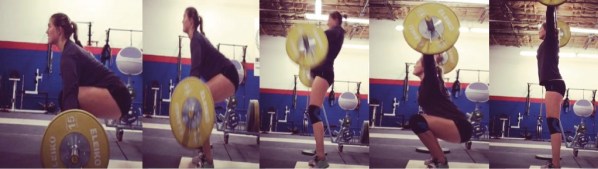
We are constantly doing squats throughout the day. Every time you stand from a seated position, you are using (or should be) the same muscles as you would during a squat. The goal of a squat is to bring the butt back and down as if taking a seat while simultaneously keeping the chest and head up to keep a neutral spine.
All sports that require a lot of strength and power in the posterior chain will benefit from squatting such as:
- Track (long jump, sprinting, high jump, etc.)
- Soccer
- Baseball/softball
- Football
- Volleyball
The squat is a bend and lift movement that primarily targets the quadriceps, glutes, and other hip extensors.
B E N E F I T S
- Strength in the glutes and quadriceps
- Mobility in the ankle, knee and hip joints
- Stability of hip flexors and core
- Improvement of power output: Higher vertical jumps, quicker acceleration time, farther broad jumps, etc.
- Decreased chance of injury when standing up/sitting down
A S S E S S M E N T S
- FMS overhead squat: Assesses the mobility of the ankle and hip joints. It will also test the mobility of the shoulder joints whichis especially important if the client is planning on doing overhead movements.
- Thomas test: Assesses the mobility in the hip joint while laying down in supine position
- Static squat/air squats
C O M M O N F A U L T S
- Knees coming together
- Leaning too far forward (probably putting too much weight on toes)
- Pushing butt back instead of bending knees far enough down
- Outward rounding of the shoulders and upper back (kyphosis)
- Inward curving of cervical and thoracic spine (lordosis)
- Leaning too far to one side (caused by muscle imbalances)
S Q U A T E X E R C I S E S
- BALANCE DRILLS
- Pistol squat
- STRENGTH EXERCISES
- Back squats
- Front squats
- Overhead squats
- POWER EXERCISES
- Box jumps
- Squat cleans
- Jumping squat
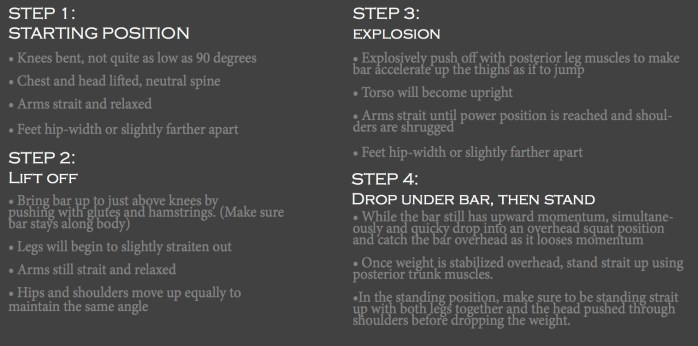
Exercise Example: Snatch
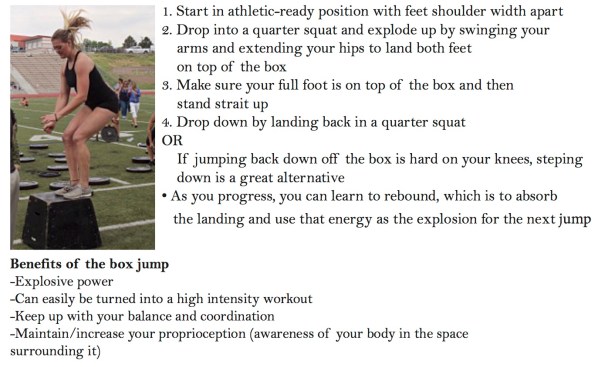
Exercise Example: Box Jump
 Orenda